Inside New Zealand's Green Grid
When you look at New Zealand, a country famous for its dramatic landscapes and deep sense of Kaitiakitanga (a Māori concept describing our stewardship of the environment), it makes sense that sustainability is woven into the national identity.
As of the first quarter of 2026, a staggering 94.5% of New Zealand’s electricity was generated from renewable sources. On average, our renewable grid electricity generation sits between 85-95%. This is far ahead of the global average, which sits around 34%.
By making the most of a unique geography and ability to move fast on policy, New Zealanders aren’t dreaming about a green future; they are running their country on it.
Energy Sources
1. Hydropower (53.5% of total electricity production in 2024)
This is definitely the backbone of New Zealand's renewable energy production. New Zealand’s mountainous topography and rainfall make it suited for hydropower generation. Our hydro dams are primarily found in the mountainous South Island.
- Grid Stability: Unlike solar and wind, hydro dams can be released almost instantaneously to balance the national grid during spikes in energy demand.
- The Vulnerability: Because New Zealand only holds around 5 weeks of hydro storage, the grid is highly vulnerable to rainfall patterns. During droughts, when hydro plummets, backup energy comes from coal and gas sources.
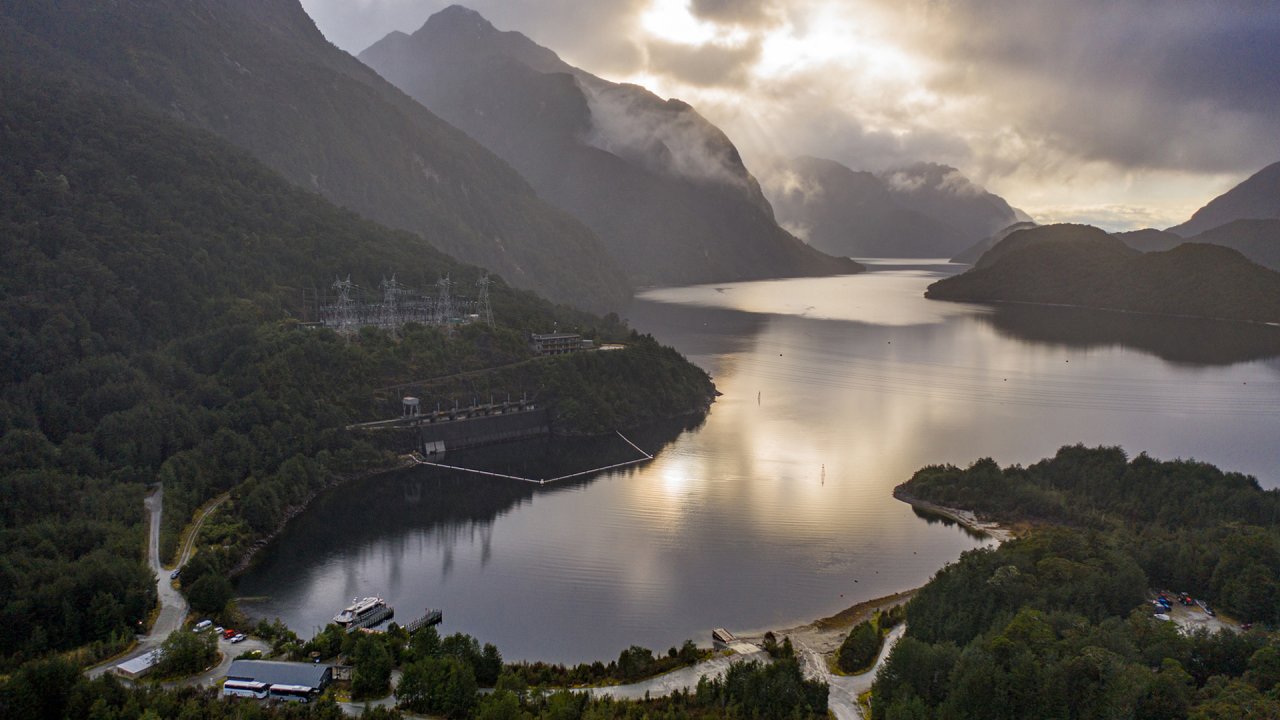
Manapōuri Power Station, Deep in the Fiordland National Park (an incredibly beautiful place to visit), the Manapōuri Power Station in the South Island has the largest generator capacity of 800 MW, enough energy to power 620,000 New Zealand homes annually.
Environmental & Social Trade-offs
There are some concerns about the environmental and social impacts of building new dams and creating lakes. Dams prevent migratory fish species from travelling upstream to spawn or downstream to the ocean. Obviously, systems like fish ladders allow for migration, but often don’t perform as effectively for native New Zealand species.
There has also been backlash over the flooding of farmland or areas of significant cultural and historical significance. As a result, it is increasingly difficult to build new dams, and the focus has shifted to rapidly scaling up other renewable energy sources.
2. Geothermal (19.9%)
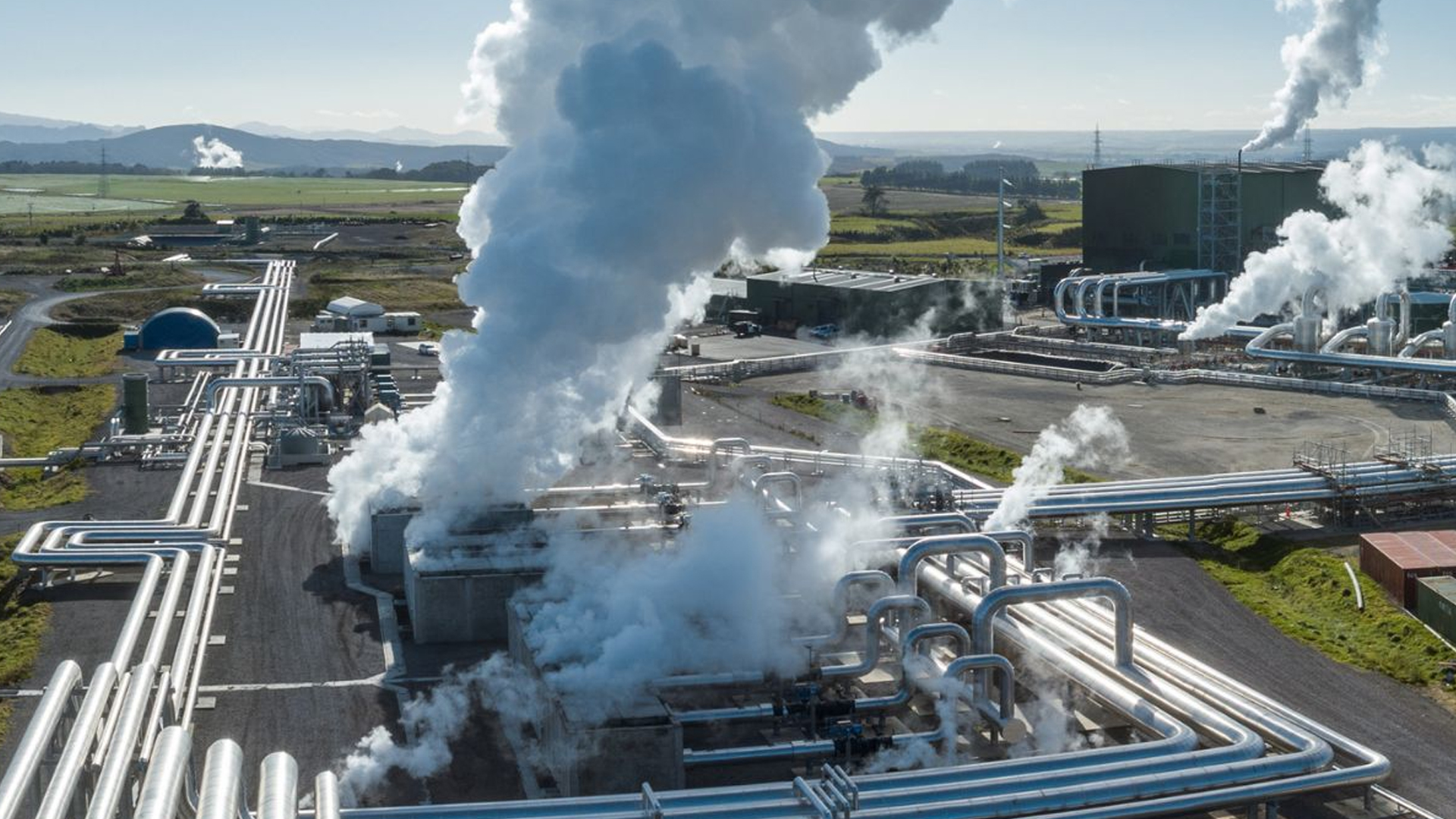
Tauhura Geothermal Power Plant, This plant features the world’s largest single-shaft geothermal steam turbine. Don't worry, that's steam, not smoke.
One of my favourite places to visit is Rotorua in New Zealand’s North Island. Famous for its distinctive smell of rotten eggs (hydrogen sulfide) and geothermal hot springs. New Zealand’s large geothermal fields are much more than a tourist attraction. Geothermal plants utilise hot geothermal water and steam to drive turbines.
- Constant Reliability: Unlike other renewable energy sources, the steam is available constantly. This reliability will likely make it a key source in our energy future.
- Growth Potential: New Zealand’s position between two tectonic plates means we have enough geothermal resources to double geothermal energy production. However, this will require significant development, as producing geothermal wells is expensive and time-consuming.
- Emissions Management: During the generation process, some carbon dioxide and methane that are dissolved in the geothermal fluid are released into the atmosphere. However, technology is being developed to capture and reinject these gases back underground (carbon sequestration).
3. Wind (8.9%) & Solar (1.4%)
These are often the poster children of the global sustainable energy transition, yet in New Zealand, they account for a mere fraction of total production.
- Wind: Currently suffers from variability and forecasting challenges. Currently, hydro plants are used to absorb spikes in wind production.
- Solar: Solar has great potential, but because you can only generate during the day, you need very large arrays to achieve significant output.
I think wind and solar are still important for diversifying New Zealand’s clean energy sources and making our grid more robust.
The Future
Although it’s nice to celebrate our nearly decarbonised electrical grid, a major reality check remains when looking at the broader picture. There is a massive distinction between electricity generation and total primary energy supply. Total primary energy supply also includes energy used for transportation and industry, not just energy generation for the grid.
Right now, New Zealand relies on fossil fuels for:
- 99% of its transport needs.
- Roughly 60% of the heat used in heavy industry.
When factoring this in, renewables account for 45.5% of New Zealand’s total primary energy supply. That being said, this is still far ahead of the global average. But this highlights that our focus must shift to decarbonising transport and industry.
It's interesting how New Zealand clearly makes the most of its natural endowments for renewable energy. Different regions and countries may have different approaches to the clean energy transition.
Sources & References
- MBIE - New Zealand Energy Quarterly
- Ember Energy - Global Electricity Review 2026
- EECA - Renewable Energy Insights
- MBIE - Energy in New Zealand 2025
- MBIE - Electricity in New Zealand
- EECA - Hydroelectricity Insights
- NIWA - Impacts of Water Dams
- EECA - Geothermal Energy Insights
- Selectra - Hydroelectricity in NZ
- Contact Energy - Tauhara Geothermal Station
- Schindler - Manapōuri Power Station Reference